This book review blog was created in Spring 2010 for the Texas Woman's University course
LS 5603: Literature for Children and Young Adults. I've decided to continue blogging about other books I read along the way and share my reviews and suggestions. Enjoy and happy reading!

Genres of books presented here include picture books, traditional literature, poetry,
nonfiction and biography, historical fiction, fiction, fantasy, and YA.

Thursday, July 1, 2010

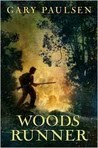
Woods Runner


1. Bibliography

Paulsen, Gary. WOODS RUNNER. 2010. New York: Random House Children's Books. ISBN: 9780385738842

2. Review

In this historical fiction novel by Gary Paulsen, author of the Newbery Honor Book HATCHET, readers are taken to the backwoods of Pennsylvania during the early stages of the Revolutionary War. Samuel is a 13-year-old boy who is more at home in the deep forest than in the small cabin with his family. His family learns that a war is brewing in nearby cities, but they still feel far removed from the crisis. When Samuel returns from hunting, he discovers to his shock that his home has been burnt to the ground and his parents are taken prisoner by the British and Hessians (Germans soldiers for hire who were brutal during the war). Samuel then ventures out on his own to find them and along the way meets several people who help him. He discovers his own inner strength and must set aside his childhood to become a man in the midst of the danger and chaos. Paulsen includes fascinating historical blurbs before each chapter that give the reader some context as to what is happening in the book. A thrilling read, with some graphic war passages. Recommended for children ages 12 and up.

3. Connections

  • Some other books by Gary Paulsen include:
    -BRIAN'S WINTER, BRIAN'S RETURN, and BRIAN'S HUNT
    -HARRIS AND ME
    -HATCHET
    -LAWN BOY and LAWN BOY RETURNS
    -MUDSHARK
    -THE RIVER
  • Other books for middle schoolers about the Revolutionary War include:
    -Avi. THE FIGHTING GROUND
    -Fast, Howard. APRIL MORNING
    -Forbes, Esther. JOHNNY TREMAIN
    -Goodman, Joan. HOPE'S CROSSING
    -Harlow, Joan Hiatt. MIDNIGHT RIDER
    -O'Dell, Scott. SARAH BISHOP
    -Wisler, G. Clifton. KING'S MOUNTAIN

Sunday, May 2, 2010

Rapunzel's Revenge


1. BIBLIOGRAPHY

Hale, Shannon and Hale, Dean (authors) and Hale, Nathan (illustrator). RAPUNZEL’S REVENGE. 2008. New York: Bloomsbury USA Children's Books. ISBN: 9781599900704.

2. PLOT SUMMARY

In RAPUNZEL’S REVENGE, authors Shannon and Dean Hale retell the story of long-haired Rapunzel, but with a more modern and humorous twist. At the beginning, Rapunzel leads a secluded life in a grand villa surrounded by a towering wall. Her only companions are loyal servants and Gothel, whom she believes is her mother and possesses the power of “growth magic.” On Rapunzel’s twelfth birthday, she finally scales the mysterious wall and is stunned to discover the truth about the family she’s lost, Gothel’s identity, and the desolation of the land that spreads beyond her home. Soon after, Rapunzel is banished by Gothel to “a creepy tree,” but is eventually able to escape by using her long, red hair as a lasso. She then meets Jack, a funny and mysterious outlaw who helps Rapunzel find her way back to Gothel. With the use of their wits and Rapunzel’s skillful handling of her braided hair, Rapunzel and Jack seek justice for Gothel’s wicked deeds, save Rapunzel’s true mother, and discover their love for one another.

3. CRITICAL ANALYSIS

In the graphic novel RAPUNZEL’S REVENGE, authors Shannon and Dean Hale create a thrilling and unconventional retelling of the Rapunzel fairy tale. At the beginning of the story, Rapunzel reveals how she discovered the wickedness and deceit of villainous Gothel, whom she had been tricked to believe was her mother. When Gothel banishes Rapunzel to live within the hollow of a giant tree, Rapunzel manages to escape the prison by using her long locks. In her quest for vengeance, Rapunzel meets Jack, an outlaw with a sketchy past. Together they forge a friendship that eventually leads to trust and love. Unlike traditional Rapunzel fairy tails, this story is set in the Wild West, incorporating outlaws, gunfights, and rugged terrain.

Throughout the novel, Shannon and Dean Hale use amusing prose and dialogue, mixed with both sarcasm and wit. When one of Gothel’s henchman leaves Rapunzel in the towering tree, she explains that “I hoped he might come right back, that it was just a joke. But for all I knew, he’d been eaten by a wild boar in the forest. A girl can dream…” Chapter titles further add to the humorous story, including “Rustling Up Some Grub” and “The Shindig.”

Illustrator Nathan Hale masterfully shows the emotions of Rapunzel, such as her astonishment when she discovers the barren land that lies beyond the confines of her villa, her sadness when she meets her true mother for the first time, and her fierceness when she battles wild coyotes with the whip of her braids. Nathan Hale also cleverly uses sepia-toned pictures to cue readers to events that happened in the past, such as Rapunzel’s flashback of being torn from mother’s arms by Gothel, and the back-story of how Gothel gained her “growth magic.” Throughout the graphic novel, Hale’s dramatic and vivid drawings will captivate readers as they are whisked through Rapunzel’s journey, including her early years in the lavish grand villa, Gothel’s horrid mine camps, Jack and Rapunzel’s stay at Pig Tree Gulch, and Rapunzel’s battle with a vicious serpent.

Readers will thoroughly enjoy Rapunzel’s evolution to a strong, self-sufficient heroine who is determined to bring justice to the witch who separated Rapunzel from her birth mother. The classic fairy tale theme of good versus evil and a happy ending will feel familiar to readers, but the action-packed scenes, clever writing, and a southwestern flare will be an exciting surprise. Both boys and girls are sure to be entertained by RAPUNZEL’S REVENGE and eager to revisit the pages again and again.


4. AWARDS WON AND REVIEW EXCERPT(S)

  • Booklist: “Hale’s art matches the story well, yielding expressive characters and lending a wonderful sense of place to the fantasy landscape. Rich with humor and excitement, this is an alternate version of a classic that will become a fast favorite of young readers.”

  • Kirkus Reviews: “A dash of typical fairy-tale romance, a strong sense of social justice and a spunky heroine make this a standout choice for younger teens.”

  • School Library Journal (starred review): “This is the tale as you've never seen it before…The dialogue is witty, the story is an enticing departure from the original, and the illustrations are magically fun and expressive. Knowing that there are more graphic novels to come from this writing team brings readers their own happily-ever-after.”

  • VOYA: “The Hale team creates an engaging heroine…This novel presents entertaining girl power at its quirkiest.

5. CONNECTIONS

  • Recommended for children ages 10 and up.

  • Children may be interested in exploring other tales of Rapunzel, such as:
    -A traditional tale: Zelinsky, Paul O. (adapter, illustrator) and Brothers Grimm (author). RAPUNZEL. 1997. New York: Dutton Juvenile. ISBN: 9780525456070. (Caldecott Medal Book)
    -A humorous tale: Wilcox, Leah (author) and Monks, Lydia (illustrator) FALLING FOR RAPUNZEL. 2003. New York: Penguin Group (USA). ISBN: 9780399237942.
    -A Caribbean retelling: Storace, Patricia (author) and Colon, Raul (illustrator). SUGAR CANE: A CARIBBEAN RAPUNZEL. 2007. New York: Hyperion Books for Children. ISBN: 9780786807918.

  • Children may be interested to read other books by Newbery Honor winning author Shannon Hale, including:
    -Hale, Shannon. PRINCESS ACADEMY. 2005. New York: Bloomsbury USA. ISBN: 9781582349930. (Newbery Honor book)
    -The Books of Bayern Series:
    -Hale, Shannon. THE GOOSE GIRL. 2003. New York: Bloomsbury USA. ISBN: 9781582348438
    -Hale, Shannon. ENNA BURNING. 2004. New York: Bloomsbury USA. ISBN: 9781582348896.
    -Hale, Shannon. RIVER SECRETS. 2006. New York: Bloomsbury USA. ISBN: 9781582349015.

  • To learn more about Shannon Hale, visit her Web site: www.shannonhale.com

  • Children may be interested in other books authored and illustrated by Nathan Hale, including:
    -Hale, Nathan (author and illustrator). THE DEVIL YOU KNOW. 2010. New York: Walker & Company. ISBN: 9781616805388.
    -Hale, Nathan (author and illustrator). YELLOWBELLY AND PLUM GO TO SCHOOL. 2007. New York: Penguin Group (USA). ISBN: 9780399246241.

  • To learn more about Nathan Hale, visit his Web site at: www.spacestationnathan.com

How I Live Now


1. BIBLIOGRAPHY

Rosoff, Meg. HOW I LIVE NOW. 2004. New York: Wendy Lamb Books. ISBN: 9780553376050.

2. PLOT SUMMARY

In Meg Rosoff’s, HOW I LIVE NOW, fifteen-year-old Daisy has a turbulent relationship with her father and pregnant stepmother. She is sent from her home in New York City to live with her aunt and teen cousins Edmond, Isaac, and Osmond, as well as their nine-year-old sister Piper at their farmhouse in the English countryside. Upon arrival to her aunt’s home, Daisy, who also struggles with an eating disorder, surprisingly feels that she “belonged to this house for centuries.” Daisy and her cousins often find themselves living alone, since Aunt Penn travels abroad. The cousins forge a bond—at times familial, amorous, and mystical. However, their carefree days abruptly come to an end when an unnamed enemy invades England. Daisy and Piper are forced to separate from the others and leave the safety of their home. Then begins Daisy’s struggle to survive in the countryside, desperate to find and rejoin her cousins, especially Edmond with whom she has fallen in love.

3. CRITICAL ANALYSIS

In the 2005 Michael A. Printz Award winning novel, HOW I LIVE NOW, author Meg Rosoff creates a gripping tale of teens becoming embroiled in World War III on the shores of a slightly futuristic England. Readers are told the story through the eyes of Daisy, a fifteen-year-old girl grappling with discovering who she is and where she belongs. Rosoff depicts Daisy as being insightful, sarcastic, and vulnerable. Over the course of the novel, Daisy evolves from a narcissistic teen to a survivor who is determined to save her cousins from harm.

Rosoff writes vivid descriptions of the characters, their actions, and the English countryside. For example, this is shown when Daisy describes her first encounter with Edmond: “…hair that looked like he cut it himself with a hatchet in the dead of night…he’s exactly like some kind of mutt…the ones you see at the dog shelter who are kind of hopeful and sweet and put their nose straight into your hand.” Daisy’s cousins also have the eerie ability to read minds. However, Rosoff is careful not to make the novel feel like science fiction, and instead the telepathy only emphasizes the uncommon bond that the cousins feel for one another.

While much of the plot seems plausible, Rosoff neglects to elaborate on some details that readers may want answered. Who are the hostile invaders infiltrating England? How do telephone and television communications become so widely disrupted? Why do English forces feel it necessary to split up the cousins? However, readers will be riveted to follow Daisy as she shares her coming of age story—discovering a place where she finally feels she truly belongs, finding her first love, and doggedly surviving in the wilderness when the world is crumbling around her. Rosoff does well to show how scared and defenseless Daisy feels as she tries to safely lead her young cousin Piper through the countryside, out of sight of hostile forces and in search for her other cousins. “For some stupid reason I started to cry then and I felt completely choked with despair and worthlessness and I couldn’t believe I was trying to lead Piper miles across England to find something the side of a microbe on a map when in my real life I couldn’t even find a clean pair of underpants in a chest of drawers.”

While the novel is written as Daisy’s stream of consciousness, long, run-on sentences are often cumbersome to read. Rosoff also seems to throw out grammatical rules—eliminating the traditional use of dialogue and instead prose and conversation are strung together. Readers may appreciate this somewhat creative way of telling the story, but it may also be distracting to some.

Many readers will have a hard time putting this novel down and will want to discover what becomes of Daisy and her cousins. However, some readers may be disturbed by some of the events that occur in the novel, including an intimacy that develops between Daisy and Edmond, and violent actions taken by the occupiers. During the last few chapters, Rosoff takes readers six years into the future and provides some insight on how the global conflict has impacted the cousins. While readers are taken on a rollercoaster ride of emotions, with elements of the story being funny, sad, troubling, and exciting, the novel ends with Daisy finding peace within herself and hopeful for new beginnings.

4. AWARDS WON AND REVIEW EXCERPT(S)

  • Publisher’s Weekly: "This riveting first novel paints a frighteningly realistic picture of a world war breaking out in the 21st century…Like the heroine, readers will emerge from the rubble much shaken, a little wiser and with perhaps a greater sense of humanity."

  • School Library Journal: “Daisy's voice is uneven, being at times teenage vapid, while elsewhere sporting a vocabulary rich with 50-cent words, phrases, and references. Rosoff barely scratches the surface of the material at hand. At times, this is both intentional and effective … but for the most part the dearth of explanation creates insurmountable questions around the basic mechanisms of the plot.”

  • Kirkus Reviews: “This is a very relatable contemporary story, told in honest, raw first-person and filled with humor, love, pathos, and carnage.”

  • 2005 Winner of Michael L. Printz Award

  • 2005 Los Angeles Times Book Prize

5. CONNECTIONS

  • Recommended for young adult readers ages 14 and up.

  • Other YA fiction novels of dystopia that may be of interest to readers include:
    -Collins, Suzanne. THE HUNGER GAMES. 2008. New York: Scholastic, Inc. ISBN: 9780439023481.
    -Dashner, James. THE MAZE RUNNER. 2009. New York: Delacorte Books for Young Readers. ISBN: 9780385737944.
    -Grant, Michael. GONE. 2008. Katherine Tegen Books. ISBN: 9780061448768
    -Haddix, Margaret Peterson. AMONG THE HIDDEN. 1998. New York: Simon & Schuster Children's Publishing. ISBN: 9780689817007 (first book of the Shadow Children Sequence).
    -Lowry, Lois. THE GIVER. 1993. New York: Houghton Mifflin Harcourt. ISBN: 9780395645666 (first book of a trilogy).

  • To learn more about author Meg Rosoff, visit her Web site at: http://www.megrosoff.co.uk/

  • Other fiction books by Meg Rosoff include:
    -Rosoff, Meg. JUST IN CASE. 2008. New York: Penguin Group (USA). ISBN: 9780452289376.
    -Rosoff, Meg. WHAT I WAS. 2008. New York: Penguin Group (USA). ISBN: 9780452290235
    -Rosoff, Meg. THE BRIDE’S FAREWELL. 2009. New York: Penguin Group (USA). ISBN: 9780670020997.

When You Reach Me


1. BIBLIOGRAPHY

Stead, Rebecca. WHEN YOU REACH ME. 2009. New York: Wendy Lamb Books. ISBN: 9780385737425.

2. PLOT SUMMARY

In Rebecca Stead’s WHEN YOU REACH ME, sixth grader Miranda is a latchkey kid who lives with her mother in New York City. In an apartment in the same building lives Sal, who has been Miranda’s best friend her entire life. Miranda explains: “I used to think of Sal as being a part of me: Sal and Miranda, Miranda and Sal.” However, after an incident with a mysterious boy on the way home from school, Sal first stops walking home from school with Miranda and then hardly spends any time with her at all. Miranda must adjust to Sal’s sudden distance, and gradually makes new friends. Meanwhile, the story takes a supernatural turn, when letters start to arrive predicting events before they happen. As Miranda helps her mother prepare to be a contestant on the popular television game show $20,0000 Pyramid, she must solve the great mystery of what happened to her friendship with Sal, why a homeless man loiters under the mailbox at the corner of her block, and who has written the mysterious letters.


3. CRITICAL ANALYSIS

In the 2010 Newbery Award winning WHEN YOU REACH ME, author Rebecca Stead masterfully writes a tale that incorporates a little bit of everything—mystery, science fiction, adventure, and realism. Readers travel through time as the story unravels and answers to questions become apparent. Stead tells the story from Miranda’s perspective, including her worry and confusion over the mysterious notes she keeps receiving. As Miranda explains “I check the box under my bed, which is where I’ve kept your notes these past few months. There it is, in your tiny handwriting: April 27th: Studio TV-15, the words all jerky-looking, like you wrote them on the subway. Your last ‘proof.’”

Readers will relate to twelve-year-old Miranda who has a strong relationship with her single mother and her mother’s boyfriend, Richard. Stead skillfully portrays an easy and natural relationship between mother and daughter—whether it be Miranda teasing her mother about a wacky outfit or how they routinely practice questions for her mother’s upcoming appearance on the popular 1970s game show $20,000 Pyramid. Stead also takes great care to describe the realistic worries of the pre-teen main character, whether it be her embarrassment over her apartment’s condition when a wealthy girl from her school comes to visit or her feelings toward a boy she makes sandwiches with at a local shop.

Humorous elements appear throughout the story, such as when Miranda explains that: “I was named for a criminal. Mom says that’s a dramatic way of looking at things, but sometimes the truth is dramatic.” Chapter titles also draw in readers and carry the story along, such as “Mom’s Rules for Life in New York City” or the “Things” chapters, including “Things You Don’t Forget”, “Things You Push Away”, and “Things You Realize. ” Stead also subtly incorporates aspects of the 1970s, such as aspects of the popular TV game show or that Miranda’s mother won’t buy grapes “because Mom doesn’t like the way grape farmers are treated in California.”

While the time travel aspect of the plot could be confusing to some readers, most will be riveted as they try to make sense of how all the pieces to the puzzle fit together—who is “the laughing man” who shakes his fist at the sky, kicks his legs toward the street, and sleeps under the mailbox? Why did the strange boy punch Miranda’s best friend Sal on their way home from school? When and where will Miranda receive another strange note that somehow proves that an event will eventually happen? Readers will be eager to discover how all of the events and characters become intertwined at the end of the story. Sure to become a classic, booklovers will want to revisit Stead’s tale again and again.


4. AWARDS WON AND REVIEW EXCERPT(S)

  • School Library Journal (starred review): This unusual, thought-provoking mystery will appeal to several types of readers.

  • Kirkus Reviews (starred review): "[T]een readers will circle back to the beginning and say, ‘Wow...cool.’”

  • Booklist (starred review): "[Q]uite wonderful … [j]ust as Miranda rereads L’Engle, children will return to this."

  • Horn Book (starred review): "Closing revelations are startling and satisfying, but quietly made."

  • The New York Times Book Review: "Every word, every sentence, has meaning and substance ... [in this] smart and mesmerizing book."

  • 2010 Newbery Medal Winner

5. CONNECTIONS

  • Recommended for children ages 10 and up. Adults will love it too!

  • To learn more about author Rebecca Stead, visit her Web site at: http://www.rebeccasteadbooks.com/

  • To listen to an audio interview of Rebecca Stead discussing WHEN YOU REACH ME, visit: http://www.randomhouse.com/kids/whenyoureachme/interview.html

  • Children may also enjoy reading Rebecca Stead’s other fiction book:
    -Stead, Rebecca. FIRST LIGHT. 2007. New York: Wendy Lamb Books. ISBN: 9780375840173.

  • Children may also enjoy reading A WRINKLE IN TIME, which is mentioned in the book:
    -L’Engle, Madeleine. A WRINKLE IN TIME. 2007. New York: Square Fish. ISBN: 9780312367541. (Published in 1962 and winner of the 1963 Newbery Medal)

Tuesday, April 13, 2010

Number the Stars


1. BIBLIOGRAPHY

Lowry, Lois. NUMBER THE STARS. 1989. Boston: Houghton Mifflin Company. ISBN: 0395510600.

2. PLOT SUMMARY

Annemarie Johansen and her dear friend Ellen have been playmates for years and have much in common. Yet Ellen is different in one critical way—she is Jewish. In NUMBER THE STARS, author Lois Lowry describes the bravery of one ten-year-old girl, as well as the dedication of the Danes to help the Jews during the 1943 Nazi occupation of Denmark. When German troops attempt to relocate all Jews from Denmark, the Johansens help to smuggle Ellen and her family to the safe shores of Sweden. Annemarie is at first confused by all that is happening and the tactics needed to shelter her friend. However, as her Uncle Henrik explains: “it is much easier to be brave if you do not know everything.” When the plan to bring Ellen and her family to safety is threatened, Annemarie discovers her own bravery and ultimately saves their lives.

3. CRITICAL ANALYSIS

In the 1990 Newbery Medal winning book NUMBER THE STARS, Lowry tells the gripping tale of Annemarie, a young Danish girl, who must quickly grow up when German soldiers begin to infiltrate her home of Copenhagen, Denmark. Annemarie’s neighbor and best friend is Ellen Rosen. Both girls attend the same school and spend hours playing paper dolls and running footraces together. However, in 1943, the increasing presence of Nazis threatens the safety of Ellen and her family because they are Jewish. Lowry expertly writes the urgency felt by ten-year-old Annemarie and her family as they attempt to rescue their dear neighbors. Lowry also realistically depicts the thoughts and concerns of a young girl faced with confusing and dire circumstances.

Lowry provides a frank description of the heroism many Danes displayed during the Nazi occupation without sharing the graphic horrors that are often portrayed in many books set in this time period. Through prose and dialog, Lowry provides significant background information about the historical events that occurred in 1943, helping young readers gain a clear understanding of their significance. For example, when Annemarie’s younger sister Kristi complains that she wants pink frosted cupcakes, her mother explains that “there hasn’t been any butter, or sugar for cupcakes, for a long time.” Similarly, at the beginning of the novel, Annemarie tries to understand why German soldiers have increased their presence in the city. Lowry writes: “…she knew what resistance meant…The resistance fighters were Danish people—no one knew who, because they were very secret—who were determined to bring harm to the Nazis however they could.”

The resonating theme of the novel is that heroism and selfless acts often occur during times of turmoil. Such was the story of many Danes who risked their own lives to save those of their Jewish countrymen during World War II. While Annemarie doubts her own bravery, her Uncle Henrik insists that she was courageous. He explains that “…you were very brave…you risked your life…that’s all that brave means—not thinking about the dangers.”

In an afterward, readers will be fascinated to learn that many of the events occurring in the novel are indeed factual. For example, Lowry explains that the Danes sinking their own naval fleet and the ingenious method used to thwart Nazi searches for Jews on fishing vessels are true. She also shares a letter excerpt written by an actual Danish resistance fighter, which she discovered during her research. Stories of the Danes' courage is less heralded than those of other occupied nations during World War II. Readers are sure to learn much in this short, fast-paced novel. Lowry’s riveting story provides a remarkable glimpse of the heroic acts often described during this significant period in world history.

4. AWARDS WON AND REVIEW EXCERPT(S)

  • Kirkus Review (starred): “A deftly told story that dramatizes how Danes appointed themselves bodyguards--not only for their king, who was in the habit of riding alone in Copenhagen, but for their Jews.”

  • Publisher’s Weekly: "The whole work is seamless, compelling, and memorable -- impossible to put down; difficult to forget."

  • School Library Journal: “Readers are taken to the very heart of Annemarie's experience, and, through her eyes, come to understand the true meaning of bravery.”

  • 1990 Newbery Medal Winner

5. CONNECTIONS

  • Recommended for readers ages 12 and up.

  • There are numerous other fiction books about the Holocaust for this age group. Some examples include:
    -Baylis-White, Mary. SHELTERING REBECCA. 1991. New York: Penguin Group. ISBN: 9780525673491.
    -Drucker, Malka and Halperin, Michael. JACOB’s RESCUE: A HOLOCAUST STORY. 1994. New York: Random House Children’s Books. ISBN: 9780440409656.
    -Kerr, Judith. WHEN HITLER STOLE PINK RABBIT. When Hitler Stole Pink Rabbit. 1972. New York: Penguin Group. ISBN: 9780698201828.
    -Matas, Carol. LISA’S War. 2007. New York: Simon & Schuster Children's Publishing. ISBN: 9781416961635.
    -Orgel, Doris. THE DEVIL IN VIENNA. 1988. New York: Penguin Group (USA) Incorporated. ISBN: 9780140325003.
    -Orlev, Uri. ISLAND ON BIRD STREET. 1992. New York: Houghton Mifflin Harcourt. ISBN: 9780395616239.
    -Suhl, Yuri. UNCLE MISHA’S PARTISANS: THE STORY OF YOUNG FREEDOM FIGHTERS IN NAZI-OCCUPIED EUROPE. 1975. London: Hamish Hamilton. ISBN: 9780241891575.
  • Lois Lowry has written numerous books; several examples include:
    -Nine books within her ANASTASIA series and four books about Anastasia’s brother Sam (e.g., ALL ABOUT SAM).
    -Lowry, Lois. AUTUMN STREET. 1980. New York: Houghton Mifflin Harcourt. ISBN: 9780395278123.
    -Lowry, Lois. FIND A STRANGER, SAY GOODBYE. 1978. New York: Houghton Mifflin Harcourt. ISBN: 9780395264591.
    -Lowry, Lois. THE SILENT BOY. 2005. New York: Random House Children's Books. ISBN: 9780440419808.
    -Lowry, Lois. A SUMMER TO DIE. 2007. New York: Random House Children's Books. ISBN: 9780385734202.
    -Lowry, Lois. TAKING CARE OF TERRIFIC. 1983. New York: Houghton Mifflin Harcourt. ISBN: 9780395340707.
    -Lowry, Lois. THE GIVER. 1993. New York: Houghton Mifflin Harcourt. ISBN: 9780395645666.
    -Lowry, Lois. GATHERING BLUE. 2000. New York: Houghton Mifflin Harcourt. ISBN: 9780618055814.
    -Lowry, Lois. MESSANGER. 2004. New York: Houghton Mifflin Harcourt. ISBN: 978061840441.

Sunday, April 11, 2010

The True Confessions of Charlotte Doyle


1. BIBLIOGRAPHY

Avi. THE TRUE CONFESSIONS OF CHARLOTTE DOYLE. 1997. New York: HarperCollins Publishers. ISBN: 9780380728855.
(first published in 1990)

2. PLOT SUMMARY

In THE TRUE CONFESSIONS OF CHARLOTTE DOYLE by Avi, the main character Charlotte Doyle recounts her transatlantic journey aboard the Seahawk in 1832. Charlotte, whose father is an officer of the company that owns the Seahawk, is leaving from her boarding school in England to return to her family in Providence, RI. Charlotte is a well-groomed schoolgirl who feels misplaced sailing among a boorish crew. At first, Charlotte is enamored by Captain Jaggery’s gentlemanly and fastidious ways. However, Zachariah, an old sailor aboard the ship, befriends Charlotte and warns her of potential danger lurking among the crew and Captain Jaggery. Not long after, Charlotte discovers a darker side to Jaggery. She ultimately takes the side of the mutinous crew and transforms herself into a sailor, donning canvas shirt and pants. Jaggery feels threatened by young Charlotte and is determined to regain control at any cost. When Jaggery accuses Charlotte of murder, she must find a way to prove her innocence before it’s too late.

3. CRITICAL ANALYSIS

In the Newbery Honor Book THE TRUE CONFESSIONS OF CHARLOTTE DOYLE, Avi, an awarding-winning author of many children’s books, writes a thrilling tale of high seas adventure, deception, and redemption. Charlotte Doyle, a thirteen-year-old schoolgirl from a prominent family, is traveling alone aboard the Seahawk merchant ship. Avi writes the book as a first person narrative in which Charlotte shares her personal account of the eventful transatlantic voyage. He provides vivid descriptions of Charlotte’s inner thoughts, as well as her emotional and physical transformation throughout the novel. For example, when Charlotte finally switches loyalty from Captain Jaggery to the crew, Charlotte explains: “…I told myself I must accept my responsibility so as to prove to those men that it had been my head that was wrong, not my heart…with fumbling hands I put on the seaman’s clothing.”

At the beginning of the book, Avi cleverly draws the reader into the story and provides details about the book’s setting and character’s history with a short prologue titled “An Important Warning.” Specifically, Charlotte, warns readers that the events they are about to read are truthful and that “if strong ideas and action offend you, read no more.” Readers quickly discover that the year is 1832, that Charlotte was American born and has been living in England for several years, and that her father is a prominent agent for an American business. Throughout the remainder of the book, Avi subtly provides the historical context in which well-bred girls of the day were expected to be refined in speech, dress, and manners. Captain Jaggery tries hard to use Charlotte’s unconventional actions aboard ship to his advantage, such as when he describes Charlotte as “a girl who, we all agree, is unnatural in every way she acts…Is it not our duty, our obligation to protect the natural order of the world?”

Avi uses authentic vernacular for all the characters, including Charlotte’s refined dialect from her proper upbringing in an English school, as well as the more rough and slang-infused language of the sailors. These varying voices add a rich flavor to the characters, yet are easy to understand for young readers. Avi also takes great care to use authentic language to describe the various parts of ship and how nautical time is kept. In the first chapter, Charlotte explains that she uses “words during my account that might not be readily familiar” and points the readers to an informative appendix where diagrams and definitions of boating terms are presented.

Throughout the novel, Charlotte struggles to do what is right and to find her suitable place in society. She at first seeks acceptance from Captain Jaggery, but is stunned to discover his deceptive and cruel ways. She then pledges her allegiance to the crew, donning a sailor’s garb and working among them. However, when she meets her family in Providence, she must return to her formal attire and cloistered existence. When Charlotte’s father reads her journal, she is forbidden to speak again of her “outlandish, not to say unnatural tales.” Charlotte will forever remember her old sailor friend Zachariah when he said “a sailor chooses the wind that takes the ship from a safe port. Be careful, Charlotte, careful of the wind you choose.” Readers will relish Avi’s surprise ending in which Charlotte follows the wind in her heart.

4. AWARDS WON AND REVIEW EXCERPT(S)

  • School Library Journal (starred review): "A breathtaking, seafaring adventure.... Awash with shipboard activity, intense feelings, and a keen sense of time and place, the story is a throwback to good old-fashioned adventure yarns on the high seas. "

  • Publisher’s Weekly: “Charlotte's story is a gem of nautical adventure… Never wavering from its 19th century setting, the novel offers suspense and entertainment modern-day readers will enjoy.”

  • Newbery Honor Book Award 1991

5. CONNECTIONS

  • Recommended for ages 12 and up.

  • Avi had written over 60 books for children, many of which have received major awards. His books cover a variety of genres—historical fiction, animal tales, picture books, early readers, young adult books, etc. To learn more about Avi and to read is daily updated blog, visit: http://www.avi-writer.com/

  • Avi has written numerous historical fiction novels; several examples include:
    -Avi. CRISPIN: THE CROSS OF LEAD. 2003. New York: Hyperion. ISBN: 9780786808281 (winner of the 2003 Newbery Medal) (Book 1)
    -Avi. CRISPIN: AT THE EDGE OF THE WORLD. 2006. New York: Hyperion. ISBN: 9780786851522 (Book 2)
    -Avi. CRISPIN: THE END OF TIME. 2010. New York: Balzer & Bray. ISBN: 9780061740800. Coming June 2010 (Book 3).
    -Avi. DON’T YOU KNOW THERE’S A WAR ON? 2001. New York: HarperCollins. ISBN: 9780380978632.
    -Avi. FIGHTING GROUND. 1984. New York: HarperCollins. ISBN: 9780380730223.
    -Avi. HARD GOLD: THE COLORADO GOLD RUSH OF 1859. 2008. New York: Hyperion. ISBN: 9781423105190.
    -Avi. THE SECRET SCHOOL. 2001. New York: Harcourt. ISBN: 9780152163754.
  • Examples of other children’s novels with strong female heroines include:
    -Creech, Sharon. WALK TWO MOONS. 1996. New York: HarperCollins Publishers. ISBN: 9780064405171.
    -George, Jean Craighead. JULIE OF THE WOLVES. 2003. New York: HarperCollins Publishers. ISBN: 9780060540951. (first published 1973).
    -Paterson, Katherine. BRIDGE TO TERABITHIA. 1987. New York: HarperCollins Publishers. ISBN: 9780064401845.
    -Paterson, Katherine. JACOB HAVE I LOVED. 1990. New York: HarperCollins Publishers. ISBN: 9780064403689.
    -O’Dell, Scott. ISLAND OF THE BLUE DOLPHINS. 1987. New York: Random House Children's Books. ISBN: 9780440439882.
    -West, Clare. ANNE OF GREEN GABLES. 1982. New York: Random House Children's Books. ISBN: 9780553213133.

Saturday, April 3, 2010

The River Between Us


1. BIBLIOGRAPHY


Peck, Richard. THE RIVER BETWEEN US. 2003. New York: Dial Books. ISBN: 9780803727359.

2. PLOT SUMMARY

In THE RIVER BETWEEN US, Peck begins the novel in 1916 through the eyes of Howard Hutchins, a teenage boy traveling in a model T Ford with his father and two younger brothers. Together, they drive to Grand Tower, Illinois, where Howard meets several relatives for the first time and learns about his grandma Tilly Pruitt’s life during the Civil War. Tilly describes how her life changed forever in 1861 when two mysterious women from New Orleans—Delphine Duval and her companion Calinda—arrived in Grand Tower by steamboat. Tilly had never met a woman more glamorous and flamboyant than Delphine. Even more puzzling was the dark-skinned Calinda, who many speculated was Delphine’s slave. When Tilly’s mother offers to house the two newcomers, scandal erupts among the town folk. As fighting continues to surge between the North and South, Tilly’s twin brother, Noah, runs off to join the Union Army. Tilly and Delphine set off to find him and soon discover the horrors of war. Amid all the chaos, Tilly learns of Delphine’s true identity and an unlikely bond is forged between to the two young women that lasts a lifetime.

3. CRITICAL ANALYSIS

Award-winning author, Richard Peck, tells a riveting story that incorporates mystery, war, friendship, and love. The story begins in 1916 through the eyes of Howard Hutchins, a fifteen-year-old boy on his way to visit his elderly grandparents, great aunt, and great uncle in Grand Tower, Illinois. Upon his arrival to his relatives’ home, he feels “the weight of its history, and mystery.” Peck switches narrators and the novel then flashes back to 1861, when Howard’s grandmother, Tilly Pruitt, was only a teenager herself. Tilly recounts living in the small settlement of Grand Tower along the Mississippi River and how her life shifted when two newcomers arrived to town.

Through Tilly’s eyes, Peck carefully provides the historical context in which the characters live. The nation was in the midst of the Civil War, Lincoln was president, neighbor was fighting neighbor, and mothers were terrified that their young sons would disappear one day to fight in the war. In addition, Peck depicts the prejudice endured by “people of color” and the means many of mixed heritage took to hide their true identity. While Peck weaves details relevant to this pivotal time in our nation’s history, young readers will be not be overwhelmed with the prose. Peck creates realistic characters with authentic voices of the time. As Tilly describes, “you had to set fire to the woods and sift the ashes to find a Republican around here. But Lincoln was an Illinois man, one of us.”

Peck also takes great care in writing realistic descriptions of the clothing, living conditions, and language of his characters. For example, Peck vividly depicts Tilly’s first impressions of the newcomer Delphine: “heavens, I’d never seen such skirts—rustling taffeta stretched wide over hoops. Her top part was encased in a cut-plush cape, with tassels.” In addition, Delphine’s New Orleans French Creole and haughty dialog is peppered throughout the novel. Peck also reveals the horror of war when Tilly and Delphine set out to find Tilly’s twin brother who is injured and suffering in Camp Defiance in Cairo, Illinois—a hospital tent city in deplorable condition. As Peck writes, “they lay where they’d been sick…In the afternoon light slanting through the canvas, they looked like old men.”

In the author’s note, Peck discusses his comprehensive research while writing the novel. He provides background on Illinois’ role in the Civil War, as well as the history, culture, and attitude toward “people of color” in New Orleans during the nineteenth century and earlier times. Readers will be captivated by the excitement and mystery experienced by the young characters in THE RIVER BETWEEN US and also gain a fascinating perspective of our nation’s history.

4. AWARDS WON AND REVIEW EXCERPT(S)

  • Booklist (starred review) (2003): “Peck's spare writing has never been more eloquent than in this powerful mystery in which personal secrets drive the plot and reveal the history…It's a riveting story that shows racism everywhere and young people facing war, not sure what side to be on or why.”
  • Horn Book (starred review) (2003): “The harsh realities of war are brutally related in a complex, always surprising plot that resonates on multiple levels.”
  • Kirkus Review (starred) (2003): “Peck writes beautifully…deftly handling themes of family, race, war, and history. A rich tale full of magic, mystery, and surprise.”
  • School Library Journal (2003): “In this thoroughly researched novel, Peck masterfully describes the female Civil War experience, the subtle and not-too-subtle ways the country was changing, and the split in loyalty that separated towns and even families.”
  • Finalist for the 2003 National Book Award, Young People's Literature
  • Winner of the 2004 Scott O'Dell Award for Historical Fiction

5. CONNECTIONS

  • Recommended for readers age 12 and up.
  • Readers can learn more about Richard Peck by visiting his Web site at: http://www.richardepeck.com/
  • There are numerous other historical fiction novels about the American Civil War for older children and young adults. Several examples include:
    -Banks, Sandra. ABRAHAM’S BATTLE: A NOVEL OF GETTYSBURG. 1999. New York: Simon & Schuster Children's. ISBN: 9780689817793.
    -Beatty, Patricia. TURN HOMEWARD, HANNALEE. 1999. New York: HarperCollins Publisher. ISBN: 9780688166762.
    -Brenaman, Miriam. EVVY'S CIVIL WAR. 2004. New York: Penguin Group (USA). ISBN: 9780142400395.
    -Clapp, Patricia. THE TAMARACK TREE. 1986. New York: HarperCollins Publishers. ISBN: 9780688028527.
    -Crane, Stephen. THE RED BADGE OF COURAGE. 1981. New York: Random House Publishing Group. ISBN: 9780553210118.
    -Hahn, Mary Downing. HEAR THE WIND BLOW. 2003. New York: Houghton Mifflin Harcourt. ISBN: 9780618181902.
    -Matas, Carol. THE WAR WITHIN: A NOVEL OF THE CIVIL WAR. 2002. New York: Simon & Schuster Children's. ISBN: 9780689843587.
    -Paulson, Gary. A SOLDIER'S HEART: A NOVEL OF THE CIVIL WAR. 2000. New York: Random House Children's Books. ISBN: 9780440228387.
  • Other books for children and young adults by Richard Peck include:
    -Peck Richard. A LONG WAY FROM CHICAGO. 2000. New York: Penguin Group. ISBN: 9780141303529 (winner of the Newberry Honor).
    -Peck, Richard. ON THE WINGS OF HEROES. 2008. New York: Penguin Group. ISBN: 9780142412046.
    -Peck, Richard. REMEMBERING THE GOOD TIMES. 1986. New York: Random House Children's Books. ISBN: 9780440973393.
    -Peck, Richard. A SEASON OF GIFTS. 2009. New York: Penguin Group. ISBN: 9780803730823.
    -Peck, Richard. SOMETHING FOR JOEY. 1983. New York: Random House Children's Books. ISBN: 9780553271997.
    -Peck, Richard. THE TEACHER’S FUNERAL. 2006. New York: Penguin Group. ISBN: 9780142405079.
    -Peck, Richard. A YEAR DOWN YONDER. 2002. New York: Penguin Group. ISBN: 9780142300701 (winner of the Newberry Award)